

 By
By 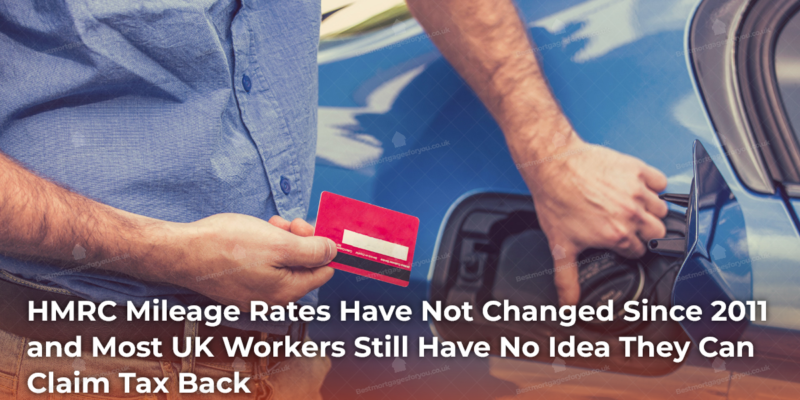
Last Updated: 7 April 2026
How many miles were driven for work last year — and how much tax relief went unclaimed as a result?
The HMRC Approved Mileage Allowance Payment (AMAP) rates have been frozen at the same level since the 2011/12 tax year, despite fuel costs, insurance premiums and general motoring expenses rising sharply over the past 15 years. As of April 2026, the rate remains 45p per mile for the first 10,000 business miles in a car or van, dropping to 25p per mile thereafter — figures that have not budged since David Cameron was Prime Minister. Yet a significant number of employees and self-employed workers across the UK either do not know these rates exist or have never claimed the tax relief they are entitled to.
For those who use a personal vehicle for business travel — whether visiting clients, attending meetings or travelling between work sites — this guide on bestmortgagesforyou.co.uk breaks down exactly what the current AMAP rates are, who qualifies, how to claim using Form P87 or Self Assessment, and what changed in late 2024 that caught many claimants off guard. It also addresses the question on every driver’s mind: will the Chancellor finally raise these rates in 2026?
Key Takeaways
- HMRC’s approved mileage rate for cars and vans has been 45p per mile (first 10,000 miles) and 25p per mile (above 10,000) since 2011/12 — with no increase confirmed for 2026/27.
- Employees whose employer reimburses less than the HMRC rate (or nothing at all) can claim Mileage Allowance Relief (MAR) worth up to hundreds of pounds per year.
- From 14 October 2024, HMRC introduced mandatory evidence requirements for P87 claims; the online iForm was restored on 23 December 2024.
- Self-employed sole traders can use the simplified expenses method to deduct business mileage directly from taxable profits.
- Claims can be backdated up to four tax years — meaning unclaimed relief from 2022/23 onwards may still be recoverable.
What Are the HMRC Approved Mileage Allowance Payments in 2026/27?
Approved Mileage Allowance Payments — commonly referred to as AMAPs — are the maximum tax-free rates that employers can pay employees for using their own vehicles on business journeys. Rather than tracking every individual cost (fuel, servicing, insurance, depreciation, road tax and MOT), a flat pence-per-mile rate covers everything in a single figure.
These rates are set by HMRC and apply across England, Wales, Scotland and Northern Ireland.
Current AMAP Rates for Cars, Vans, Motorcycles and Bicycles
The table below sets out the approved mileage rates for the 2025/26 and 2026/27 tax years. As of April 2026, no changes have been announced.
| Vehicle Type | First 10,000 Business Miles | Each Mile Over 10,000 |
|---|---|---|
| Cars and vans | 45p | 25p |
| Motorcycles | 24p | 24p |
| Bicycles | 20p | 20p |
| Passenger supplement (per passenger, per mile) | 5p | |
Source: GOV.UK — Rates and allowances: travel, mileage and fuel allowances. Figures correct as of April 2026 and subject to change.
Worth noting, the 10,000-mile threshold resets on 6 April each year and is calculated per person, not per employer. Switching jobs mid-year does not reset the counter — cumulative business miles carry across.
Electric vehicles, hybrids, petrol and diesel cars all use the same 45p/25p rate under AMAPs. There is no separate approved mileage rate for EVs.
Why the Rates Have Not Changed Since 2011
The current AMAP rates were set in April 2011. In the 15 years since, average fuel prices have fluctuated significantly — peaking above £1.90 per litre in mid-2022 — while insurance, servicing and vehicle depreciation costs have all risen.
Despite growing pressure from organisations including Unison and the RAC Foundation, successive governments chose not to adjust the rates. The argument from HM Treasury has traditionally been that the rates are designed as a broad average, and that the fuel duty freeze (in place for over a decade until March 2026) partially offsets rising costs.
That changed — at least rhetorically — on 10 March 2026, when Chancellor Rachel Reeves told Parliament that the government recognises motoring costs have ‘evolved significantly’ and confirmed the matter would be considered at a future fiscal event. Whether that results in an actual rate increase remains to be seen.
Who Can Actually Claim Mileage Tax Relief?
Not everyone who drives for work qualifies for mileage tax relief. The rules differ depending on employment status, and there is a crucial distinction between business travel and ordinary commuting that catches many people out.
Employees Reimbursed Below the HMRC Rate
If an employer reimburses business mileage at less than the approved AMAP rate — or pays nothing at all — the employee can claim Mileage Allowance Relief (MAR) on the difference.
Here’s the thing: the relief is not a cash refund of the full shortfall. It is a reduction in taxable income, which means the actual saving depends on the individual’s tax band.
Worked example — employee receiving 25p per mile:
| Item | Amount |
|---|---|
| Business miles driven in 2025/26 | 8,000 |
| HMRC approved amount (8,000 × 45p) | £3,600 |
| Employer reimbursement (8,000 × 25p) | £2,000 |
| Shortfall eligible for MAR | £1,600 |
| Tax relief at 20% (basic rate) | £320 |
| Tax relief at 40% (higher rate) | £640 |
Figures based on HMRC AMAP rates as of April 2026 and subject to change based on individual circumstances.
That £320 or £640 saving is not insignificant — and it can be claimed for the current year plus four previous tax years. An employee who has never claimed could potentially recover relief stretching back to 2022/23.
Self-Employed Sole Traders Using Simplified Expenses
Self-employed workers can use the same 45p/25p rates under HMRC’s simplified expenses method. Rather than claiming tax relief on a shortfall, the total mileage figure is deducted directly from trading profits on the Self Assessment tax return.
Put simply, a sole trader who drives 12,000 business miles in 2025/26 would calculate the deduction as follows: (10,000 × 45p) + (2,000 × 25p) = £5,000. That £5,000 comes straight off taxable profit.
Bear in mind, once the simplified expenses method is chosen for a vehicle, switching to actual costs (fuel receipts, insurance, depreciation) for that same vehicle is not permitted — so it is worth running the numbers before committing. Independent tax advice from a qualified accountant may be helpful here.
How to Claim Mileage Allowance Relief Using Form P87
For employees on PAYE who do not file a Self Assessment return and whose total employment expenses are £2,500 or less, HMRC Form P87 is the standard route for claiming Mileage Allowance Relief.
The process changed significantly in late 2024, and understanding the current rules is essential to avoid rejected claims.
What HMRC Requires in a Mileage Log
HMRC expects claimants to maintain a contemporaneous mileage log — meaning records kept at or near the time of each journey, not compiled from memory months later.
A compliant mileage log should include:
- The date of each business journey
- Start and end postcodes (or addresses)
- The business purpose of the trip (e.g. ‘client meeting at Manchester office’)
- The distance covered in miles
- Whether any passengers were carried for business purposes
Without this log, a claim is likely to be rejected — particularly under the stricter evidence requirements introduced in October 2024.
Ordinary commuting — the daily journey from home to a regular, permanent workplace — does not qualify as business mileage. However, travel to temporary workplaces (expected to last fewer than 24 months) does count, and this distinction is where many eligible employees miss out.
The October 2024 Change That Caught Many Claimants Off Guard
On 14 October 2024, HMRC overhauled the P87 process. The online and telephone submission routes were suspended, and all claims (except flat-rate uniform expenses) had to be submitted by post with supporting evidence.
This came after HMRC identified a growing number of ineligible claims, many driven by ‘high volume agents’ — tax refund companies that submitted bulk claims, sometimes without proper checks.
The postal-only period lasted until 22 December 2024, when HMRC launched a new online iForm accessible through the Government Gateway Personal Tax Account. The iForm now includes a facility to upload evidence digitally, making the process faster than post — though the evidence requirement itself is permanent.
So, as things stand in 2026, there are two ways to submit a P87 claim:
- Online — via the HMRC iForm on the Government Gateway (recommended for individuals; not available for agents submitting on behalf of clients)
- By post — using the paper P87 form downloaded from GOV.UK, sent with evidence to: Pay As You Earn and Self Assessment, HM Revenue and Customs, BX9 1AS
Processing times vary. Online claims are typically handled faster, while postal claims can take 10 to 12 weeks during busy periods such as January and April.
Bear in mind, from the 2026/27 tax year (starting 6 April 2026), HMRC has confirmed that working-from-home expenses can no longer be claimed via P87. Mileage claims remain unaffected by this change.
Common Myths About HMRC Mileage Claims
A surprising number of misconceptions circulate online — on forums, social media and even from some tax refund companies. It is worth setting the record straight.
Myth: ‘Employers are legally required to pay mileage.’ In practice, there is no legal obligation for employers to reimburse mileage at the HMRC rate, or at all. The AMAP rates represent the maximum that can be paid tax-free — they are not a minimum entitlement. If an employer chooses to pay less, the employee’s remedy is to claim MAR from HMRC.
Myth: ‘The daily commute counts as business mileage.’ It does not. HMRC defines ordinary commuting — the journey between home and a permanent workplace — as private travel. Only journeys to temporary workplaces or between different work locations qualify.
Myth: ‘Electric vehicle drivers get a higher mileage rate.’ As of April 2026, electric vehicles, hybrids, petrol and diesel cars are all covered by the same 45p/25p AMAP rate. There is no separate or enhanced rate for EVs, despite the lower running costs associated with electric motoring. Advisory fuel rates (AFRs), which apply to company car drivers, do have a separate EV rate (9p per mile as of February 2026) — but that is an entirely different scheme.
Myth: ‘Claims can only cover the current tax year.’ Mileage Allowance Relief can be backdated up to four tax years. As of 2026/27, that means unclaimed relief from 2022/23, 2023/24, 2024/25 and 2025/26 is still recoverable — provided a mileage log or other evidence exists. The deadline for the earliest year (2022/23) is 5 April 2027.
Myth: ‘Claiming mileage triggers a tax investigation.’ A legitimate, well-documented mileage claim does not increase the risk of an HMRC investigation. What does attract scrutiny is submitting inflated claims without supporting evidence — which is precisely why HMRC tightened the P87 process in 2024.
What Happens If an Employer Pays More Than the Approved Rate?
Some employers choose to reimburse mileage at rates above the HMRC-approved level — for example, 50p per mile instead of 45p. While generous, this creates a tax consequence.
Any amount paid above the approved rate is treated as a benefit in kind (BIK). That excess is subject to Income Tax and, in some cases, employer Class 1A National Insurance contributions.
Example: An employee drives 6,000 business miles and receives 50p per mile from the employer.
| Item | Amount |
|---|---|
| Employer payment (6,000 × 50p) | £3,000 |
| HMRC approved amount (6,000 × 45p) | £2,700 |
| Taxable excess (BIK) | £300 |
Figures based on HMRC AMAP rates as of April 2026 and subject to change.
That £300 excess must be reported by the employer on the P11D form. The employee would then owe tax on it — £60 at the basic rate or £120 at the higher rate.
For this reason, most employers choose to reimburse at exactly the AMAP rate. It is the most tax-efficient approach for both parties.
Will HMRC Finally Increase Mileage Rates in 2026?
This is the question that has been asked repeatedly since fuel prices surged in 2022 — and the answer, as of April 2026, remains uncertain.
On 10 March 2026, the Chancellor Rachel Reeves responded to a parliamentary question from Jim McMahon MP (Oldham West, Chadderton and Royton) by acknowledging that motoring costs have evolved significantly since the rates were last set. She confirmed the government is ‘looking at the issue’ and would consider it at a future fiscal event.
That said, no timetable for a rate change has been given. The next major fiscal event is expected in Autumn 2026, which could be the earliest opportunity for any adjustment — though there is no guarantee it will happen then.
In the meantime, organisations such as Unison and the RAC Foundation continue to campaign for a rate increase. The RAC Foundation has previously argued that a rate closer to 55p per mile would more accurately reflect the true cost of running a car in the UK.
For those driving significant business mileage, the practical advice is to continue claiming at the current 45p/25p rate and to keep meticulous records. If rates are eventually increased, HMRC would not retrospectively apply any new rate to previous tax years — so claiming now at the existing rate remains the right course of action.
Reporting Mileage Claims — Who to Contact
For questions about mileage claims, AMAP rates or Form P87, the relevant contact points are:
- HMRC Income Tax helpline: 0300 200 3300 (Monday to Friday, 8am to 6pm)
- HMRC postal address for P87 claims: Pay As You Earn and Self Assessment, HM Revenue and Customs, BX9 1AS
- MoneyHelper (FCA-backed guidance service): moneyhelper.org.uk or 0800 138 7777
- GOV.UK Personal Tax Account: accessible via the Government Gateway for online P87 iForm submissions
Those who suspect they have been misled by a tax refund company into making an ineligible claim should contact HMRC directly. Fraudulent or inflated claims can result in penalties, and in serious cases, criminal prosecution.
Disclaimer: The information on bestmortgagesforyou.co.uk is for general informational purposes only and does not constitute financial advice. Tax rules, mileage rates and eligibility criteria change frequently. Always consult a qualified, HMRC-recognised tax adviser or accountant before making financial decisions. This site is not affiliated with HMRC, HM Treasury, the FCA, or any employer or lender. Figures cited are based on published HMRC rates as of April 2026 and are subject to change in line with future fiscal announcements.
Closing Thoughts
HMRC’s mileage rates may not have changed in 15 years, but the ability to claim tax relief on business travel is very much alive — and significantly underused. Whether employed or self-employed, anyone who drives a personal vehicle for work and keeps proper records could be sitting on unclaimed relief stretching back four tax years.
The key is documentation. A well-maintained mileage log, submitted through the correct channel — whether the online iForm or paper P87 — is the difference between a successful claim and a rejected one. With the Chancellor signalling that a rate review may be on the horizon, there has rarely been a better time to get mileage records in order.
For those unsure about eligibility, speaking to a qualified tax adviser or checking the guidance on GOV.UK is a sensible first step. Independent advice is always recommended before making any tax-related decisions.
Sources
- GOV.UK — Rates and allowances: travel, mileage and fuel allowances
- GOV.UK — Claim tax relief for job expenses by post (Form P87)
- GOV.UK — Simplified expenses for vehicles
- GOV.UK — Evidence required to claim PAYE (P87) employment expenses
- MoneyHelper
- Hansard — HMRC Approved Mileage Rates, 10 March 2026
Frequently Asked Questions

Senior financial practitioner with over 25 years' experience in banking and MSME consultancy in Lampung. Currently serving as Deputy Editor-in-Chief, delivering banking, business economics, and financial literacy content that is warm, accurate, and accessible to all.
Judul Pekerjaan: Deputy Editor-in-Chief & Senior Financial Literacy Writer






Comments