

 By
By 
[Last Updated: 18 March 2026]
Ever wondered why some mortgage applications sail through whilst others hit unexpected roadblocks? The answer often lies buried in a three-digit number that most people rarely check until it’s too late.
A credit score serves as a financial fingerprint, influencing everything from mortgage approvals and interest rates to mobile phone contracts and even certain job applications. Yet despite its importance, millions of UK residents have never actually seen theirs — largely because many assume checking costs money or damages the score itself (it doesn’t). Here at bestmortgagesforyou.co.uk, the aim is to cut through the confusion and provide clear, actionable guidance on accessing credit information without spending a penny.
What lenders rarely advertise is that checking a credit score is entirely free, unlimited, and leaves no mark on the credit file. Under UK law, everyone has the right to access their statutory credit report at no cost, and several reputable services now offer ongoing free access to scores and reports from all three major credit reference agencies.
Key Takeaways
- Three separate credit scores exist in the UK — Experian, Equifax and TransUnion each calculate scores differently using different scales and data
- Checking personal credit score is always free and never affects the score (soft search only)
- Experian updated its scoring system in late 2025/early 2026 — the new scale runs from 0 to 1250, replacing the previous 0 to 999 range
- ClearScore (Equifax), Credit Karma (TransUnion) and Experian Free Account provide completely free ongoing access
- Mortgage lenders don’t rely on a single score — they review the full credit report and apply their own internal criteria
- The electoral roll is crucial — registering to vote at a current address is one of the simplest ways to improve creditworthiness
Why Checking Credit Score Matters Before Any Major Financial Decision
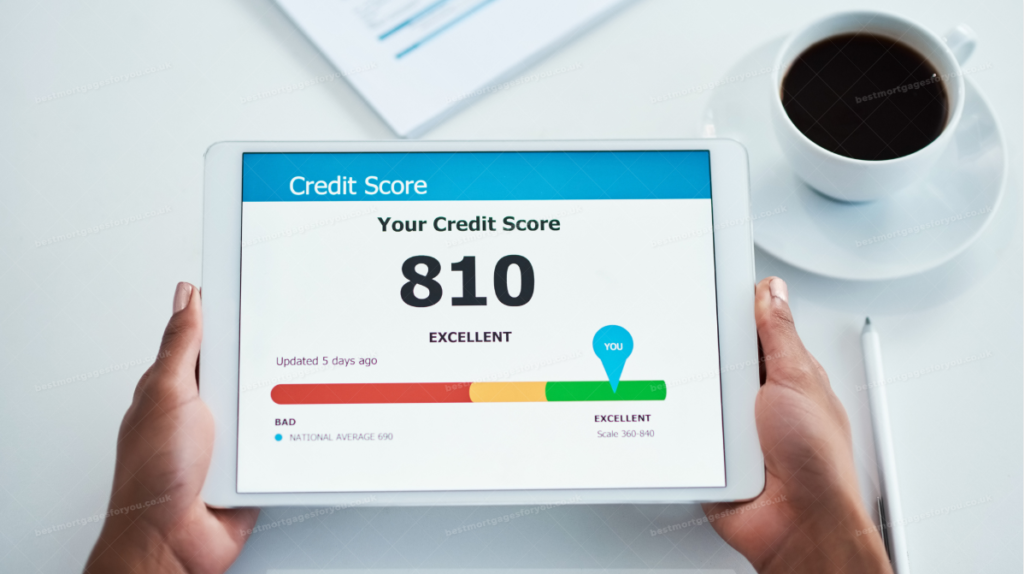
Anyone planning to apply for a mortgage, personal loan, credit card or even a new mobile phone contract would benefit from understanding their credit profile beforehand. A quick check can reveal errors, identify areas for improvement, and prevent the unpleasant surprise of a declined application.
Mortgage lenders, in particular, scrutinise credit history closely. A missed payment from three years ago, an outdated address, or an unknown financial association could all affect lending decisions. Discovering these issues early leaves time to address them before submitting a formal application.
What Exactly Is a Credit Score and Who Calculates It?
A credit score is a numerical representation of creditworthiness — essentially a prediction of how likely someone is to repay borrowed money based on past financial behaviour. In the UK, this score is calculated by credit reference agencies (CRAs), which collect information from banks, lenders, utility companies, local councils and courts.
The score itself is based on data held in the credit report, including payment history, credit utilisation, length of credit history, types of credit held and recent applications. Each CRA uses its own algorithm and weighting system, which is why the same person can have three different scores.
Worth noting: lenders don’t actually see the score displayed on consumer-facing apps. They access the raw data in the credit report and apply their own proprietary scoring models alongside affordability assessments and internal criteria.
The Three Credit Reference Agencies in the UK Explained
The UK has three main credit reference agencies, each regulated by the Financial Conduct Authority (FCA):
| Credit Reference Agency | Score Range | Free Access Via | Update Frequency |
|---|---|---|---|
| Experian | 0–1250 (updated 2025/26) | Experian Free Account | Monthly (free) or daily (paid) |
| Equifax | 0–1000 | ClearScore | Weekly |
| TransUnion | 0–710 | Credit Karma UK | Weekly |
Source: Individual CRA websites. Figures correct as of March 2026.
Different lenders use different agencies — and some check more than one. For a complete picture of creditworthiness, checking all three is advisable.
How to Check Credit Score Free With Experian
Experian is the UK’s largest credit reference agency, and as of late 2025/early 2026, it has overhauled its scoring system with a new 0 to 1250 scale. The previous maximum of 999 has been replaced to provide what Experian describes as a more granular view of creditworthiness.
Experian Free Account vs Experian Credit Expert
Two main options exist for accessing Experian data:
Experian Free Account — Completely free, provides a monthly credit score update and basic report access. No payment details required, no trial period to cancel. This is sufficient for most purposes, including a pre-mortgage health check.
CreditExpert (Paid) — Costs £14.99 per month and offers daily score updates, detailed breakdowns, personalised improvement tips, alerts and fraud monitoring. A 30-day free trial is available, but requires a debit or credit card and must be cancelled before the trial ends to avoid charges.
For those simply wanting to check their score before a mortgage application, the free account provides everything needed.
What the Experian Score Range Means
The new Experian bands as of 2026 are:| Score Band | Score Range | What It Means |
|---|---|---|
| Excellent | 1121–1250 | Access to best rates and products |
| Very Good | 1001–1120 | Likely to qualify for competitive rates |
| Good | 881–1000 | Access to most mainstream credit options |
| Fair | 721–880 | Some options available, possibly higher rates |
| Low | 0–720 | Limited options, higher interest rates likely |
Source: Experian UK. Bands correct as of March 2026.
Importantly, Experian has removed the labels ‘Poor’ and ‘Very Poor’ and discontinued the use of red colouring, stating these were discouraging and did not reflect the credit options actually available in those bands.
The new system also incorporates additional data points including rental payments (opt-in), overdraft usage, mortgage overpayments and credit card cash withdrawals. Around 42% of users may see their band improve under the new system, whilst approximately 44% may drop a band — though this reflects the new calculation method rather than any change in actual creditworthiness.
How to Check Credit Score Free With Equifax
Equifax is the second-largest credit reference agency in the UK. Direct access through Equifax’s own website requires a paid subscription after a 30-day trial, but there’s a completely free alternative that provides the same underlying data.
Using ClearScore to Access Equifax Data
ClearScore is a free service that partners with Equifax to provide UK consumers with access to their Equifax credit score and full credit report at no cost — forever, not just a trial period.
To sign up:
- Visit the ClearScore website or download the app
- Provide basic personal details (name, address, date of birth)
- Answer security questions to verify identity
- Access score and report instantly
ClearScore updates the credit report weekly and offers additional features including eligibility checking for credit products (without affecting the score), a timeline showing how accounts have changed, and tips for improvement. As a credit broker, ClearScore earns commission if users take out products through the platform, but there’s no obligation to do so.
Understanding the Equifax Score Bands
Equifax uses a 0 to 1000 scale (updated from the previous 0 to 700 range in 2021):
| Score Band | Score Range |
|---|---|
| Excellent | 811–1000 |
| Very Good | 671–810 |
| Good | 531–670 |
| Fair | 439–530 |
| Poor | 0–438 |
Source: Equifax UK via ClearScore. Figures correct as of March 2026.
How to Check Credit Score Free With TransUnion
TransUnion is the third major UK credit reference agency. Unlike Experian and Equifax, TransUnion does not offer direct consumer access to full reports and scores through its own website — instead, it partners with services like Credit Karma UK and TotallyMoney.
Credit Karma UK and TransUnion Partnership
Credit Karma UK provides free, unlimited access to TransUnion credit scores and reports. The service is entirely free with no hidden trials or subscription fees.
To register:
- Visit the Credit Karma UK website or download the app
- Enter personal details and create an account
- Complete identity verification
- View score and report immediately
Credit Karma updates reports weekly and provides personalised recommendations for credit products based on approval odds. Like ClearScore, it operates as a credit broker and earns commission from referrals, but using the service to check scores costs nothing.
Decoding the TransUnion Score Range
TransUnion uses a 0 to 710 scale — the smallest range of the three agencies:
| Score Band | Score Range |
|---|---|
| Excellent | 628–710 |
| Good | 604–627 |
| Fair | 566–603 |
| Poor | 551–565 |
| Very Poor | 0–550 |
Source: TransUnion UK via Credit Karma. Figures correct as of March 2026.
Because TransUnion’s maximum is 710, a score of 680 would be considered excellent — whereas the same number on Experian’s 1250 scale would fall into the ‘Low’ band. This is why comparing raw numbers across agencies is meaningless.
Why the Three Scores Differ and Which One Lenders Actually Use
It’s entirely normal — and expected — for the three credit scores to differ significantly. Someone might have an ‘Excellent’ rating with TransUnion, ‘Very Good’ with Equifax, and ‘Good’ with Experian, all at the same time.
The Myth of a Single ‘Official’ UK Credit Score
Here’s the thing: there is no single, universal credit score in the UK. The scores displayed on ClearScore, Credit Karma and the Experian app are consumer-facing interpretations — useful for tracking trends and spotting issues, but not what lenders actually see.
Each CRA collects slightly different data (not all lenders report to all three agencies), uses different algorithms, and updates at different frequencies. The score is a guide, not a definitive judgement.
How Mortgage Lenders Assess Creditworthiness Beyond the Number
When assessing a mortgage application, lenders typically consider:
The full credit report — Every account, payment history, search footprint, address history and financial association is reviewed, not just the headline number.
Affordability — Income, employment status, existing debts, dependents and essential outgoings are assessed under FCA affordability rules to ensure repayments are sustainable.
Internal criteria — Each lender has proprietary scorecards factoring in their appetite for risk, target customer profile and previous experience with similar applicants.
Loan-to-value (LTV) — The size of the deposit relative to the property value affects both approval odds and interest rate offers.
A high credit score improves chances but doesn’t guarantee approval. Equally, a lower score doesn’t automatically mean rejection — particularly with specialist lenders or with a larger deposit.
Soft Checks vs Hard Checks: What Happens When Checking Credit Score
One of the most common concerns about checking a credit score is whether doing so will damage it. The short answer: checking personal credit score is a soft search and has absolutely no negative effect.
Does Checking Credit Score Lower It?
No. When checking personal credit score through ClearScore, Credit Karma, Experian Free Account or any similar service, this registers as a ‘soft search’ (also called a soft check or soft inquiry).
Soft searches:
- Are visible only to the individual (not to lenders)
- Do not affect the credit score
- Can be performed unlimited times without consequence
- Include personal credit checks, eligibility checkers, pre-approval tools and some employer background checks
Hard searches (also called hard checks or hard inquiries):
- Occur when formally applying for credit (mortgage, loan, credit card, mobile contract)
- Are visible to other lenders
- Can temporarily lower the score (typically by a few points)
- Remain on the credit report for 12 months (visible to lenders) to 2 years (visible to the individual)
Multiple hard searches in a short period can signal financial distress to lenders, which is why it’s worth checking eligibility with soft-search tools before making formal applications.
Interestingly, mortgage ‘rate shopping’ is treated more leniently. Multiple mortgage credit searches within a short window (typically 14 to 45 days, depending on the scoring model) are often counted as a single inquiry, recognising that sensible borrowers compare options.
How Often Should Credit Score Be Checked?
There’s no such thing as checking too often — soft searches don’t count against creditworthiness. That said, obsessing over daily fluctuations isn’t particularly productive either.
A sensible approach:
- Monthly — Regular checks to spot trends, catch errors early and monitor for fraud
- Before major applications — At least 3 to 6 months before applying for a mortgage, to allow time to address any issues
- After major financial changes — Opening or closing accounts, paying off debt, moving house
Free Monitoring Tools and Alerts
All three free services — ClearScore, Credit Karma and Experian Free Account — offer optional alerts when significant changes occur on the credit report. These might include:
- New accounts being opened
- Searches by lenders
- Changes to address or personal details
- Missed payments being recorded
- Public records (CCJs, bankruptcies, IVAs)
Enabling these alerts provides an early warning system for both errors and potential fraud, without requiring manual log-ins.
Common Credit Report Errors and How to Dispute Them
Mistakes on credit reports are more common than many people realise. Errors can range from minor (outdated address) to significant (incorrectly recorded defaults or accounts belonging to someone else entirely).
Common errors include:
- Accounts that have been settled still showing as outstanding
- Incorrect payment history (missed payments that were actually paid on time)
- Wrong addresses or old addresses still listed
- Financial associations with ex-partners who should have been unlinked
- Accounts that don’t belong to the individual (possible identity fraud or data mix-up)
- Duplicate entries for the same account
The Statutory Right to Correct Mistakes
Under UK data protection law (UK GDPR and the Data Protection Act 2018) and the Consumer Credit Act 1974, everyone has the right to request correction of inaccurate information held by credit reference agencies.
The process:
- Identify the error on the credit report via ClearScore, Credit Karma or Experian
- Raise a dispute through the app or website — all three services have built-in dispute tools
- The CRA investigates with the relevant lender (usually within 28 days)
- If corrected, the report updates; if the dispute is rejected, a ‘Notice of Correction’ (up to 200 words) can be added to the file explaining the circumstances
For errors involving possible fraud or identity theft, Action Fraud (the UK’s national reporting centre for fraud and cybercrime) should be contacted immediately.
Practical Steps to Improve Credit Score Before a Mortgage Application
While no quick fix exists for a genuinely poor credit history, several actions can make a meaningful difference — some within weeks, others over months.
Quick Wins That Can Boost Score Within 30 Days
Register on the electoral roll — This is one of the simplest and most effective steps. Lenders use the electoral register to verify identity and address. Registering takes five minutes at GOV.UK — Register to Vote.
Reduce credit utilisation — Keeping credit card balances below 30% of the available limit (ideally under 10%) signals responsible borrowing. Paying down balances or requesting a credit limit increase (without additional spending) can help.
Check for and dispute errors — Removing inaccurate negative marks can have an immediate positive effect once resolved.
Sever outdated financial associations — Joint accounts with ex-partners or former housemates can link credit files. If no longer financially connected, requesting ‘disassociation’ from each CRA removes this link.
Longer-Term Strategies for Credit Health
Build a consistent payment history — Setting up Direct Debits for at least the minimum payment on all accounts prevents missed payments, which remain on file for six years.
Avoid multiple applications — Each hard search adds a footprint. Using eligibility checkers (soft search) before applying helps target applications likely to succeed.
Maintain older accounts — Length of credit history matters. Keeping an older credit card open (even with minimal use) demonstrates stability.
Mix of credit types — Having a blend of credit (e.g. credit card, mobile contract, current account with overdraft) shows ability to manage different account types responsibly.
Consider credit-builder products — For those with thin or damaged credit files, secured credit cards or credit-builder apps that report to CRAs can help establish positive history.
Fraud and Scam Awareness: Protecting Credit Identity
Credit score and identity theft go hand in hand. Fraudsters who obtain personal details can open accounts in someone else’s name, potentially causing significant damage to credit files.
Warning signs of credit fraud:
- Credit searches on the report from unrecognised lenders
- Accounts appearing that were never opened
- Bills or letters arriving for unknown debts
- Being unexpectedly rejected for credit despite a good score
What to do if fraud is suspected:
- Report to Action Fraud (the UK’s national fraud reporting centre): 0300 123 2040 or actionfraud.police.uk
- Contact each CRA to add a CIFAS protective registration marker
- Inform any affected lenders immediately
- Request a Notice of Correction be added to the credit file
- Monitor the credit report closely for further suspicious activity
Official contacts for complaints and guidance:
| Organisation | Contact Details | Purpose |
|---|---|---|
| Action Fraud | 0300 123 2040 | Report fraud and cybercrime |
| Financial Ombudsman Service | 0800 023 4567 | Complaints about lenders or CRAs |
| Information Commissioner’s Office (ICO) | 0303 123 1113 | Data protection complaints |
| CIFAS | cifas.org.uk | Protective registration against fraud |
Final Thoughts
Checking credit scores before any significant financial decision — particularly a mortgage application — is not just sensible, it’s essential. The good news is that this costs nothing, takes only a few minutes, and can be done as often as needed without any negative consequence.
The key takeaway: there is no single ‘official’ credit score. Checking all three agencies (Experian via the free account, Equifax via ClearScore, TransUnion via Credit Karma) provides the fullest picture. Focus on the underlying report rather than the headline number, correct any errors, and build positive habits over time.
Important Notice: The information on this page is for general informational purposes only and does not constitute financial advice. Mortgage products, rates and eligibility criteria change frequently. Always consult a qualified, FCA-regulated mortgage adviser before making financial decisions. This site is not affiliated with the FCA, Bank of England, or any lender.
For those preparing for a mortgage application, allowing at least three to six months to review and improve credit health where possible is advisable. Small steps — registering to vote, paying down balances, disputing errors — can make a genuine difference to both approval chances and the interest rates offered.
Sources
- GOV.UK — Register to Vote
- Financial Conduct Authority (FCA)
- Information Commissioner’s Office — Credit
- MoneyHelper — Credit Scores
- Experian UK — Introducing the 1250 Score
Frequently Asked Questions
1 Is checking my own credit score free in the UK?
2 Does checking my credit score affect it?
3 Why do I have three different credit scores in the UK?
4 What is a good credit score in the UK?
5 How can I improve my credit score quickly?
6 What credit score do I need for a mortgage in the UK?

Senior financial practitioner with over 25 years' experience in banking and MSME consultancy in Lampung. Currently serving as Deputy Editor-in-Chief, delivering banking, business economics, and financial literacy content that is warm, accurate, and accessible to all.
Judul Pekerjaan: Deputy Editor-in-Chief & Senior Financial Literacy Writer


Comments