

 By
By 
[Last Updated: 18 March 2026]
What does it take to join one of the most selective freelance platforms in the UK — and why do so many applicants never make it past the front door?
PeoplePerHour, founded in London in 2007, has built a reputation for maintaining a curated community of freelancers rather than opening the gates to everyone who signs up. Unlike platforms such as Fiverr or Freelancer.com, where registration is virtually instant, PeoplePerHour actively vets every freelancer application before granting access to its marketplace. The result is a higher average quality of talent — but also a frustrating experience for the thousands of applicants who receive rejection emails without a clear explanation. For those exploring the freelance economy alongside broader financial planning, resources like bestmortgagesforyou.co.uk can help bridge the gap between earning independently and managing long-term financial goals.
This guide covers the entire PeoplePerHour registration process in 2026, explains why applications get rejected, and lays out precisely what a successful application looks like — from account setup to landing the first paying project.
Key Takeaways
- PeoplePerHour reviews every freelancer application and rejects a significant number, particularly in oversaturated categories such as graphic design and content writing.
- Common rejection reasons include poor-quality profile pictures, incomplete summaries, missing portfolio samples and choosing categories with low buyer demand.
- The platform offers a free standard review (up to seven working days) and a paid fast-track option (one working day), though paying does not guarantee approval.
- Freelancer commission fees start at 20% on the first £250 earned per buyer, dropping to 7.5% and then 3.5% as the relationship grows.
- Turning an approved account into actual income requires a strong Hourlie strategy, strategic use of the 15 free monthly proposal credits and a profile built with the buyer’s perspective in mind.
Why PeoplePerHour Rejects So Many Freelancer Applications
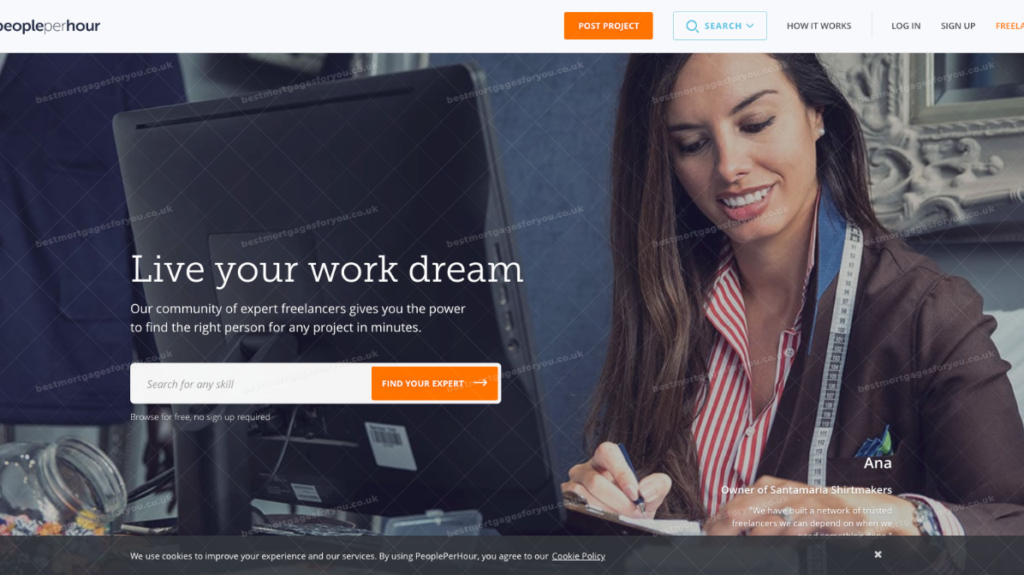
Before diving into the registration steps, it is worth understanding why PeoplePerHour operates differently from most freelance marketplaces. The platform’s approach to quality control shapes every aspect of the sign-up experience.
The Vetting System Explained
PeoplePerHour uses a manual review process for every freelancer application. According to the platform’s official support documentation, each application is assessed based on the completeness and professionalism of the profile, the relevance of skills to current buyer demand and the quality of uploaded portfolio samples.
The platform has stated publicly that it aims to protect its existing freelancer community by ensuring there is sufficient demand for new entrants. In practice, this means applications in categories already saturated with active freelancers — such as logo design, data entry and basic SEO — face a significantly higher rejection rate.
Here is the thing: PeoplePerHour does not publish an exact approval rate. However, the sheer volume of rejection complaints on its community support forums suggests that a substantial proportion of applications do not succeed on the first attempt. Some applicants report being rejected three times before either getting approved or giving up entirely.
Common Rejection Reasons Most Applicants Overlook
Based on PeoplePerHour’s published guidance and patterns observed across its support forums, the most frequent reasons for rejection include the following.
| Rejection Reason | What PeoplePerHour Expects |
|---|---|
| Unprofessional or fake profile picture | A genuine, well-lit headshot — no logos, cartoons, illustrations or AI-generated images |
| Incomplete professional summary | A detailed description of experience, skills and what makes the freelancer stand out |
| No portfolio samples uploaded | At least two to three relevant work samples demonstrating capability |
| Choosing an oversaturated category | Categories with active buyer demand — not already flooded with thousands of existing freelancers |
| Poor grammar or language quality | Clear, professional English — or fluency in the primary language listed on the profile |
| Missing personal or location details | Complete and accurate name, address and contact information |
Source: PeoplePerHour Support — Freelancer Application Process. Information correct as of March 2026.
A common belief is that simply filling in every field guarantees approval. In reality, PeoplePerHour’s review team assesses the overall quality and market fit of each application — meaning a technically complete but generic profile can still be rejected.
Step-by-Step Registration That Actually Gets Approved
Now, here is the practical part. The registration process itself is straightforward, but the details within each step determine whether an application succeeds or fails.
Choosing the Right Account Type
PeoplePerHour offers two account types at sign-up: Freelancer and Buyer (referred to as ‘Company Owner’ on the platform). Anyone looking to offer services and earn money needs the freelancer account.
It is worth noting that buyer registration is considerably simpler and does not require vetting — buyers can post projects and browse freelancer profiles almost immediately after signing up. Freelancer registration, by contrast, involves a multi-step application with manual review.
The sign-up page is accessible at PeoplePerHour’s registration page, where new users can create an account using an email address or sign in with existing Google or Facebook credentials. Regardless of the method chosen, email verification is required before the application form becomes available.
Crafting a Profile That Passes Review
This is where most applications are won or lost. PeoplePerHour’s application form, once the email is verified, asks freelancers to complete several critical sections.
Profile Picture
The platform is explicit: only genuine photographs of the applicant are accepted. Logos, illustrations, cartoons and stock images will result in immediate rejection. The ideal profile picture is a recent, well-lit headshot with a clean background — professional but approachable.
Professional Summary
This is arguably the most important section of the application. PeoplePerHour’s support team has stated that applicants should treat this section as a professional introduction, covering experience in the industry, specific skills, what differentiates the freelancer from others in the same category and a brief mention of professional passion or approach.
Bear in mind, vague summaries along the lines of ‘I am a hardworking freelancer looking for opportunities’ will not pass review. The summary needs to demonstrate genuine expertise and a clear value proposition.
Location and Language
Accurate location information is mandatory. PeoplePerHour serves a global user base, but its strongest buyer market remains the United Kingdom and Europe. Listing the correct location and primary language — along with any additional languages — strengthens the application.
Skills, Portfolio and Professional Summary
Skills Selection
PeoplePerHour allows a maximum of 15 skills per profile. Choosing these strategically is essential — they should reflect genuine expertise and align with categories where buyer demand exists.
A practical approach: before submitting an application, it is worth browsing PeoplePerHour’s active job listings to identify which categories have fresh postings. Applying in a category with visible buyer demand significantly improves approval odds compared to entering an already overcrowded space.
Portfolio Samples
Uploading at least two to three work samples is strongly recommended, even though the platform does not always make this feel mandatory. Applications without portfolio evidence face a much higher rejection rate. For those who lack formal portfolio pieces, creating sample work specifically for the application — such as a mock logo design, a sample blog post or a demonstration video — is a perfectly acceptable approach.
What Happens After Submission
Once every section of the application form is completed, freelancers reach the final stage: submitting for review. This is where the process diverges depending on urgency and budget.
Standard Review vs Fast-Track
PeoplePerHour offers two review options.
| Review Type | Turnaround Time | Cost | Key Consideration |
|---|---|---|---|
| Standard Review | Up to 7 working days | Free | No additional cost; suitable for most applicants |
| Fast-Track Review | 1 working day | Paid (amount varies) | Faster review only — does not improve approval chances |
Source: PeoplePerHour Support. Information correct as of March 2026.
Interestingly, paying for fast-track review does not increase the likelihood of approval — it simply moves the application to the front of the queue. A weak application submitted via fast-track will still be rejected, just more quickly.
What to Do If the Application Is Rejected
PeoplePerHour allows up to three resubmissions of a rejected application. After three rejections, the system locks the freelancer out and directs them to contact customer support directly.
So, what should an applicant who has been rejected actually do?
- Review the rejection email carefully — though PeoplePerHour’s feedback is often generic, it sometimes hints at the specific issue (e.g. profile picture, category saturation)
- Improve the weakest section of the profile — for most rejected applicants, this means rewriting the professional summary and uploading stronger portfolio samples
- Consider switching to a less saturated category — if the chosen skill area has low demand, selecting a different primary category may make the difference
- Resubmit with all improvements in place — avoid resubmitting without making meaningful changes, as this simply wastes one of the three available attempts
For applicants locked out after three rejections, contacting PeoplePerHour’s support team at [email protected] is the only remaining path. Some users on the community forums report that support can unlock the application for a fourth attempt in certain circumstances, though this is not guaranteed.
PeoplePerHour Fees and How They Affect New Freelancers
Understanding the platform’s fee structure before starting is essential, as it directly affects how much a freelancer actually takes home from each project.
As of March 2026, PeoplePerHour operates a tiered commission structure based on lifetime billing per individual buyer.
| Lifetime Billing Per Buyer | Service Fee (excl. VAT) | Practical Impact |
|---|---|---|
| Below £250 | 20% | A £100 project pays out £80 before tax |
| £250 – £5,000 | 7.5% | A £500 project pays out £462.50 before tax |
| Over £5,000 | 3.5% | A £6,000 project pays out £5,790 before tax |
Source: PeoplePerHour Terms and Conditions. Fees correct as of March 2026 and subject to change.
The minimum service fee per invoice is £1 (excluding VAT). For UK-based freelancers earning above the VAT threshold (£90,000 as of the 2025/26 tax year), VAT registration through HMRC allows VAT on service fees to be reclaimed quarterly.
In addition to commission fees, freelancers receive 15 free proposal credits each month. Once these are used up, additional credits must be purchased — making it important to be selective about which projects to bid on rather than applying to everything in sight.
How PeoplePerHour Fees Compare
For context, Fiverr charges a flat 20% commission on all earnings with no tiered reduction, whilst Upwork’s service fee currently sits at around 10% for most contracts. PeoplePerHour’s structure rewards long-term client relationships — the effective fee drops significantly once a freelancer builds repeat business with the same buyer.
That said, the 20% starting rate on the first £250 per buyer is not exactly cheap for new freelancers. Factoring this cost into pricing from day one is essential to avoid undercharging.
Turning an Approved Account Into Paying Work
Getting approved is only half the battle. The next challenge — arguably the harder one — is converting that shiny new profile into actual income.
Hourlies: The Passive Income Tool
PeoplePerHour’s Hourlies system is one of its most distinctive features. Despite the name, Hourlies are fixed-price service packages — similar to Fiverr’s ‘gigs’. Freelancers create listings offering specific services at set prices, and buyers can purchase them directly without any back-and-forth negotiation.
A well-crafted Hourlie with clear deliverables, competitive pricing and strong sample work can generate inbound enquiries without the freelancer needing to submit a single proposal. Each Hourlie can include up to three pricing tiers (basic, standard and premium), allowing flexibility in what is offered.
Proposals: Quality Over Quantity
With only 15 free proposal credits per month, a scattergun approach to bidding is not viable. Each proposal should be tailored to the specific project, demonstrating an understanding of the buyer’s requirements and explaining — briefly and clearly — why the freelancer is the right fit.
Generic proposals copied and pasted across multiple job listings are a common reason new freelancers struggle to win work, even after approval.
Building the CERT Badge
PeoplePerHour offers a CERT verification badge for freelancers who complete identity verification. This badge appears on the profile and in proposal submissions, providing an additional layer of trust for potential buyers. Completing verification early — ideally right after approval — is a practical step towards standing out in a competitive marketplace.
Staying Safe on Freelance Platforms
Freelance platforms, including PeoplePerHour, are not immune to fraudulent activity. New freelancers should be aware of common risks and know where to report suspicious behaviour.
Red Flags to Watch For
- Buyers requesting work to be completed before payment is secured in escrow
- Requests to communicate or transact outside the PeoplePerHour platform
- Job postings offering unusually high pay for minimal work
- Requests for personal financial information beyond what the platform requires
Where to Report Issues
PeoplePerHour has an internal dispute resolution system, and its support team can be reached at [email protected]. For broader concerns about online fraud in the UK, the following resources are available.
| Organisation | Contact | Purpose |
|---|---|---|
| Action Fraud | 0300 123 2040 | UK national fraud and cybercrime reporting centre |
| Citizens Advice | 0800 144 8848 | Free guidance on consumer rights and disputes |
| HMRC | 0300 200 3300 | Tax queries related to freelance and self-employment income |
Contact details correct as of March 2026.
For freelancers registering as self-employed in the UK, GOV.UK’s self-employment guide provides essential information on tax registration, National Insurance contributions and record-keeping obligations.
Tax and Self-Employment Considerations
Earning through PeoplePerHour — or any freelance platform — constitutes self-employment income in the eyes of HMRC. Anyone earning above the trading allowance of £1,000 per tax year is required to register for Self Assessment and file an annual tax return.
Key obligations for UK-based freelancers include the following.
- Registering as self-employed with HMRC — this must be done by 5 October in the second tax year of trading
- Keeping accurate records of all income and expenses
- Paying Income Tax and Class 2/Class 4 National Insurance on profits above the relevant thresholds
- Filing a Self Assessment tax return by 31 January each year (for the previous tax year)
For the 2025/26 tax year, the personal allowance remains at £12,570, meaning no Income Tax is due on the first £12,570 of total income. Above this threshold, the basic rate of 20% applies up to £50,270.
Worth noting: PeoplePerHour service fees are a legitimate business expense and can be deducted from taxable profits. Keeping invoices and fee statements — available in the ‘Payments’ section of the platform — is essential for accurate tax filing.
For those whose freelance income eventually supports larger financial decisions, understanding how self-employment affects mortgage affordability assessments and creditworthiness is equally important.
Disclaimer: The information on bestmortgagesforyou.co.uk is for general informational purposes only and does not constitute financial advice. Mortgage products, rates and eligibility criteria change frequently. Always consult a qualified, FCA-regulated mortgage adviser before making financial decisions. This site is not affiliated with the FCA, Bank of England, or any lender. Platform fees, policies and approval processes referenced in this article are based on publicly available information as of March 2026 and may change without notice.
In short, getting approved on PeoplePerHour in 2026 is very much achievable — but it requires treating the application as a professional pitch rather than a quick form to fill in. A polished profile picture, a compelling summary, relevant portfolio samples and a strategically chosen category form the foundation of a successful application.
For freelancers who do get approved, the real work begins with crafting competitive Hourlies, using proposal credits wisely and building long-term buyer relationships that bring commission fees down from 20% to as low as 3.5%. The platform rewards quality, persistence and professionalism — and those who approach it with that mindset stand the best chance of turning freelancing into a genuine income stream.
Sources
- PeoplePerHour — Freelancer Application Process
- PeoplePerHour — Freelancer Commission Fees
- GOV.UK — Working for Yourself
- GOV.UK — Self Assessment Tax Returns
- GOV.UK — VAT Registration
- MoneyHelper — Self-Employment and Tax
Frequently Asked Questions

Young content writer and SEO specialist from Bandar Lampung. Graduate in Communication Studies from the University of Bandar Lampung, focused on delivering content about buy-now-pay-later services, financial tips, and money-making opportunities relevant to Gen Z and millennials.

Comments