

 By
By 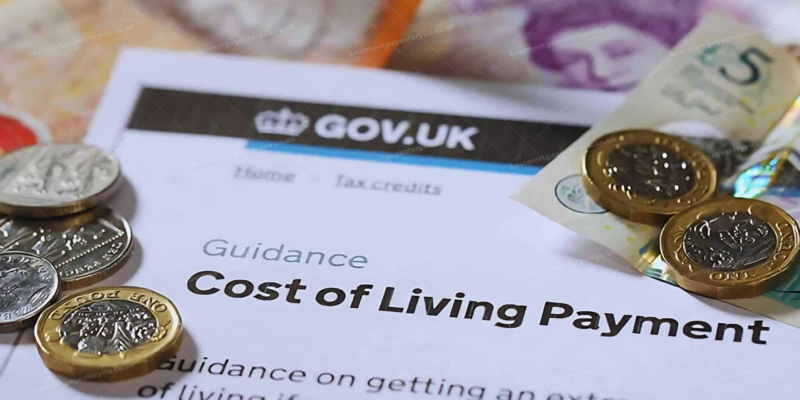
[Last Updated: 22 March 2026]
Is there really a new cost of living payment coming in 2026 — or have millions of households been misled by social media rumours and recycled headlines?
The short answer, according to GOV.UK, is that the Department for Work and Pensions (DWP) is not planning to make any further Cost of Living Payments. The original scheme ran between 2022 and 2024, with the final £299 payment issued to eligible claimants between 6 and 22 February 2024. Despite claims of a new £450, £500 or even £725 payment circulating online, no such payment has been confirmed by any official government source. Here at bestmortgagesforyou.co.uk, every claim in this guide has been verified against GOV.UK and official DWP publications.
That said, the end of one-off lump-sum payments does not mean all support has disappeared. The government has shifted to a different approach — raising regular benefits, reducing energy bills and expanding targeted assistance through local councils. Understanding what is genuinely available could make a meaningful difference to household budgets in the 2026/27 financial year.
Key Takeaways
- The Cost of Living Payment scheme has officially ended. DWP has confirmed no further payments are planned for 2026 or beyond.
- Rumours of a £450, £500 or £725 payment are not supported by any government announcement — these claims stem from misinformation and recycled content.
- From April 2026, most working-age benefits rise by 3.8%, Universal Credit standard allowances increase by approximately 6.1%, and the State Pension rises by 4.8% under the triple lock.
- The Ofgem energy price cap falls to £1,641 from April 2026, with households expected to save an average of £150 on annual energy bills.
- The Household Support Fund ends on 31 March 2026 and is replaced by the new Crisis and Resilience Fund from April 2026, running for at least three years.
Why Millions Are Still Searching for a Cost of Living Payment in 2026
Search interest in “cost of living payment 2026” remains remarkably high across the UK, despite the scheme having formally concluded nearly two years ago. A combination of ongoing financial pressure, outdated articles still ranking on Google, and viral social media claims has created widespread confusion about what the government is — and is not — offering.
According to the Resolution Foundation, around 55% of households in poverty include at least one working adult. With food prices, energy bills and rent still well above pre-pandemic levels, it is hardly surprising that many families continue to hope for direct financial support similar to the payments received between 2022 and 2024.
The problem is that much of the information circulating online is either speculative, misleading or outright false. Recognising the difference between verified government policy and unconfirmed claims is essential for anyone trying to plan a household budget in 2026.
What GOV.UK and the DWP Have Actually Confirmed
Before exploring the support that is available, it is worth being absolutely clear about what has been officially confirmed — and what has not.
The Official Position — No Further Payments Planned
As of 14 January 2026, the GOV.UK guidance page for Cost of Living Payments states plainly: “DWP is not planning to make any more Cost of Living Payments.” The GOV.UK cost of living support overview reinforces this, confirming that “there will be no Cost of Living Payment for 2026 and there are no more payments planned in the future.”
The original scheme was always intended as a temporary intervention during a period of exceptional economic pressure. Between 2022 and 2024, eligible claimants on means-tested benefits received a total of five payments: £326, £324, £301, £300 and £299. Those on disability benefits and pensioners received separate additional payments during the same period.
After the final £299 payment in February 2024, the scheme closed. No further extensions or replacement schemes of the same format have been announced by the DWP, HM Treasury or any other government department.
Where the £450, £500 and £725 Rumours Came From
Over the past several months, multiple websites and social media accounts have published claims suggesting that the government has “confirmed” a new one-off payment — with figures typically quoted as £450, £500 or £725. None of these claims are supported by official government statements, policy papers, budget announcements or press releases.
In most cases, the misinformation appears to stem from a few common sources. Some articles recycle figures from the 2022–2024 payment scheme and present them as upcoming payments. Others misinterpret local council grants or hypothetical policy proposals as confirmed national support.
Bear in mind, all legitimate DWP payment schemes have historically been announced well in advance through official government channels, including GOV.UK, ministerial statements and the annual Budget or Autumn Statement. The absence of any such announcement is itself a strong indicator that these claims are baseless.
Anyone who receives a text message, email or social media message claiming that a new cost of living payment is available — particularly if it asks for bank details or personal information — should treat it as a potential scam and report it immediately.
Every Form of Financial Support Still Available in 2026/27
While the one-off payments have ended, the government has introduced a range of structural changes designed to provide more consistent, ongoing support. Here is a breakdown of the main forms of financial help available from April 2026.
Benefit Uprating — Who Gets a 3.8% Increase from April 2026
From 6 April 2026, most working-age and disability benefits will increase by 3.8%, in line with the Consumer Prices Index (CPI) rate of inflation recorded in September 2025. This applies to benefits administered by both the DWP and HMRC.
The following table summarises the key benefit rate changes. All figures apply from 6 April 2026 and are based on the DWP’s confirmed uprating figures.
| Benefit | 2025/26 Rate | 2026/27 Rate | Change |
|---|---|---|---|
| UC Standard Allowance (single, 25+) | £400.14/month | £424.90/month | +6.1% |
| UC Standard Allowance (couple, both 25+) | £628.28/month | £666.94/month | +6.1% |
| PIP Daily Living — Enhanced | £108.55/week | £112.67/week | +3.8% |
| PIP Mobility — Enhanced | £75.75/week | £78.63/week | +3.8% |
| Carer’s Allowance | £83.30/week | £86.45/week | +3.8% |
| Child Benefit (eldest child) | £26.05/week | £27.05/week | +3.8% |
| Child Benefit (additional children) | £17.25/week | £17.90/week | +3.8% |
Source: GOV.UK — Benefit and pension rates 2026 to 2027. Figures correct as of March 2026 and subject to change.
Worth noting, the UC standard allowance increase is significantly higher than the 3.8% CPI rate because the government committed to an additional above-inflation uplift as part of the Universal Credit Act 2025. For a single claimant aged 25 or over, this means an extra £24.76 per month — roughly £6 more per week.
State Pension Triple Lock — The 4.8% Rise Explained
From April 2026, the State Pension increases by 4.8% under the triple lock mechanism, which guarantees a rise in line with the highest of CPI inflation, average earnings growth or 2.5%.
For the 2026/27 financial year, the relevant measure was average earnings growth at 4.8%. This brings the full new State Pension to £241.30 per week — equivalent to £12,547.60 per year. The basic State Pension (for those who reached State Pension age before 6 April 2016) rises to £184.90 per week.
These increases are applied automatically and do not require any action from recipients.
Energy Bills — What the New £1,641 Price Cap Means
From 1 April 2026, Ofgem has confirmed the energy price cap will fall to £1,641 per year for a typical dual-fuel household on a standard variable tariff — a 7% reduction from the previous quarter.
Here’s the thing, though: the price cap is not a maximum bill. It limits the unit rate and standing charge that suppliers can set, meaning actual bills will vary depending on how much energy a household uses. The £1,641 figure represents a ‘typical’ household consuming a specific amount of gas and electricity.
In addition, the government announced in the Autumn Budget 2025 that an average of £150 would be taken off energy bills from April 2026 by removing certain policy costs from consumer bills and funding renewable energy obligations through general taxation instead.
| Quarter | Annual Price Cap (Typical Household) | Change |
|---|---|---|
| Q1 2026 (Jan–Mar) | £1,738 | — |
| Q2 2026 (Apr–Jun) | £1,641 | −7% |
| Q3 2026 (Jul–Sep) | TBC — analysts warn of potential 10% rise | TBC |
Source: Ofgem. Figures correct as of March 2026. The price cap is reviewed quarterly and may change based on wholesale energy costs. Those already on existing articles may find more detail in the energy price cap 2026 guide.
Analysts have flagged that the price cap could rise by up to 10% from July 2026 due to ongoing tensions in the Middle East affecting wholesale gas prices. Households should factor this possibility into budgeting plans.
Household Support Fund and the New Crisis and Resilience Fund
The Household Support Fund (HSF) — administered by local councils in England using DWP funding — has been one of the most important safety nets for vulnerable households since 2021. The current round (HSF7) runs from 1 April 2025 to 31 March 2026, and provides crisis support for essentials including food, energy bills and housing costs.
Eligibility varies by local authority, but the fund is generally aimed at low-income households regardless of whether they receive benefits. Applications are typically made directly through a local council website.
From April 2026, the HSF will be replaced by the new Crisis and Resilience Fund (CRF). According to the government, the CRF will run for at least three years (April 2026 to March 2029), with up to £1 billion per year across England. The key difference is that the CRF aims to go beyond emergency support by also helping households build longer-term financial stability.
Councils are expected to publish details of their local CRF schemes and open applications from 1 April 2026.
Universal Credit Changes — Two-Child Limit Removal and Standard Allowance Boost
Two significant changes to Universal Credit take effect from April 2026:
The removal of the two-child limit means families will be able to receive Universal Credit support for all their children, regardless of family size. According to GOV.UK, this is expected to lift approximately 450,000 children out of poverty.
The standard allowance increase of approximately 6.1% — well above the 3.8% CPI rate — reflects the government’s commitment under the Universal Credit Act 2025 to ‘rebalance’ UC by raising the basic amount that all claimants receive.
However, not all UC claimants will benefit equally. New claimants found to have limited capability for work and work-related activity (LCWRA) from 6 April 2026 onwards will receive a significantly reduced health-related element — approximately £217.26 per month, compared to £429.80 for existing claimants. This represents a near-50% reduction for those who do not meet the new ‘severe conditions criteria.’ Existing claimants on the protected rate will not be affected. Those already receiving Universal Credit should check their online journal for updated payment details.
Warm Home Discount, Child Benefit and Other Targeted Help
Several other forms of targeted support remain available or have been expanded:
Warm Home Discount (WHD): The scheme provides a £150 annual rebate on electricity bills for eligible low-income households. For winter 2025/26, the government expanded the scheme to approximately 6.1 million households by removing the ‘high cost to heat’ property threshold. Most eligible households in England and Wales receive the rebate automatically. The current WHD regulations expire on 31 March 2026, and the government has consulted on the scheme’s future beyond that date.
Child Benefit: From April 2026, the eldest child rate rises to £27.05 per week and the additional child rate to £17.90 per week. The High Income Child Benefit Charge now applies only to individuals earning above £60,000, with full clawback at £80,000 — a significant improvement on the previous £50,000 threshold.
Pension Credit: This remains one of the most underclaimed benefits in the UK, yet it acts as a gateway to additional support including the Winter Fuel Payment, Warm Home Discount, Council Tax Reduction, free NHS dental and optical care, and cold weather payments.
Budgeting Loans and Budgeting Advances: Available to those on qualifying benefits who need help with one-off expenses such as furniture, clothing or travel costs.
Council Tax Reduction: Administered by local councils, this can reduce council tax bills by up to 100% for eligible households.
How to Check Eligibility and Claim Available Support
Rather than waiting for a one-off payment that is not coming, households can take several practical steps to ensure they are accessing all available support:
- Visit the GOV.UK benefits calculator to check eligibility for benefits and financial support based on individual circumstances
- Contact the local council directly to ask about the Household Support Fund (before 31 March 2026) or the Crisis and Resilience Fund (from April 2026)
- Ensure all existing benefit claims are up to date and accurate — outdated information can result in lower payments or missed entitlements
- Check whether Pension Credit applies, particularly for households where one or both adults have reached State Pension age, as this unlocks several additional benefits
- Use MoneyHelper for free, impartial guidance on managing household finances and claiming available support
Those looking to build savings alongside claiming benefits may find it helpful to explore current account and savings options that complement government support.
Key Dates for April 2026 — Benefit Changes at a Glance
The following table provides a quick reference for the main changes taking effect in the 2026/27 financial year.
| Change | Effective Date | Details |
|---|---|---|
| Benefit uprating (most benefits) | 6 April 2026 | 3.8% increase in line with CPI |
| UC standard allowance boost | 6 April 2026 | Approx. 6.1% increase (above inflation) |
| UC two-child limit removed | 6 April 2026 | Families receive UC support for all children |
| UC LCWRA reduction (new claimants) | 6 April 2026 | New rate £217.26/month (was £429.80) |
| State Pension increase (triple lock) | 6 April 2026 | 4.8% rise — new State Pension £241.30/week |
| Energy price cap reduction | 1 April 2026 | New cap £1,641/year (−7%) |
| Household Support Fund ends | 31 March 2026 | Final date for HSF applications via local council |
| Crisis and Resilience Fund begins | 1 April 2026 | Replaces HSF — 3-year fund, up to £1bn/year |
| Child Benefit increase | 6 April 2026 | Eldest £27.05/week, additional £17.90/week |
| Rail fares freeze | 2026 | All regulated fares frozen (England and parts of Wales) |
| Prescription charge freeze | 2026 | Charges kept under £10 in England |
Source: GOV.UK, DWP, Ofgem. Figures correct as of March 2026. All rates are subject to change based on individual circumstances and government policy decisions.
Staying Safe — How to Spot Cost of Living Payment Scams
The absence of a confirmed 2026 payment has created fertile ground for scammers. Fraudulent text messages, emails and social media posts claiming that a new cost of living payment is “ready to claim” have surged since late 2025.
A few important points to bear in mind:
- The DWP and HMRC will never ask for bank details, passwords or personal information by text message, email or social media
- All legitimate Cost of Living Payments from 2022–2024 were paid automatically — claimants did not need to apply or click a link
- GOV.UK has confirmed that any message asking someone to “apply” for a cost of living payment in 2026 is likely a scam
- Physical letters from the DWP always include a reference number and are sent from verified postal addresses
Anyone who suspects they have received a scam message should report it to Action Fraud on 0300 123 2040 or online at actionfraud.police.uk. Suspicious text messages can be forwarded to 7726 (free of charge). Suspicious emails claiming to be from HMRC or DWP can be forwarded to [email protected].
For broader concerns about financial fraud, the Financial Ombudsman Service can be reached on 0800 023 4567.
Disclaimer: The information on bestmortgagesforyou.co.uk is for general informational purposes only and does not constitute financial advice. Benefit rates, eligibility criteria and government support schemes change frequently. Always consult official GOV.UK guidance or a qualified, independent adviser before making financial decisions. This site is not affiliated with the DWP, HMRC, FCA, Bank of England, or any government department.
The end of the Cost of Living Payment scheme does not mean the end of financial support — but it does mean that households need to be more proactive about checking eligibility and claiming what is available. The shift towards higher regular benefit payments, lower energy bills and locally administered emergency funds represents a different model of support, and one that requires a different approach.
For anyone feeling overwhelmed by the changes, MoneyHelper (0800 138 7777) offers free, impartial guidance on benefits, debt and budgeting. Citizens Advice (citizensadvice.org.uk) can also help identify unclaimed entitlements.
Sources
- GOV.UK — Cost of Living Payments
- GOV.UK — Cost of Living Support Overview
- GOV.UK — Help with the Cost of Living in 2026
- GOV.UK — Benefit and Pension Rates 2026 to 2027
- GOV.UK — Household Support Fund Guidance (April 2025 to March 2026)
- House of Commons Library — Benefits Uprating 2026/27
- House of Commons Library — Changes to Universal Credit Rates from April 2026
- MoneyHelper
Frequently Asked Questions

Senior economist and financial journalist with over 20 years' experience in banking and financial consultancy. Currently serving as Editor-in-Chief at a prominent Indonesian financial publication, ensuring every piece of content is accurate, balanced, and genuinely useful.


Comments