Filed under Budget & Planning
Hair and Makeup Schedule for Wedding Day: Padding, Slots and a Smoother Morning
Overview
Plan the morning from your dress-on time backward, book realistic beauty blocks with cushions, and align the photographer with the moments worth capturing.
Wedding mornings go more smoothly when the schedule assumes minor hiccups. A beauty block may end on time, yet everyone still needs to collect bags, hit the restroom once more and relocate. Padding the calendar lets those normal pauses happen without the whole day sliding.
Anchor everything to the moment you step into your dress. Fix that time first, then map backward with stylists, your coordinator and photographer. Build in minutes for zipping, bustling, and the photos and embraces that tend to follow getting dressed.
Pick a realistic dress-on time
Let the gown guide how long dressing takes:
- A basic zipper may need 5 to 10 minutes.
- Plan on about 15 minutes for most gowns.
- Buttons, corset lacing or a detailed back can need 20 minutes or longer.
Tell your coordinator how long dressing and bustling require. If you are unsure, time a dry run at the final fitting. One bustle in the source planner’s experience took 45 minutes—enough to throw off a timeline that ignored it. Be specific when you share the schedule.
Dressing also includes beats for portraits, a parent or loved one dropping in, and hugs. Reserve space for those beats instead of treating dress-on as a purely mechanical step. When it fits your plan, changing at the venue avoids traveling in the gown. A meaningful or photogenic prep space can still be a reason to dress somewhere else.
Budget time for every guest in the chair
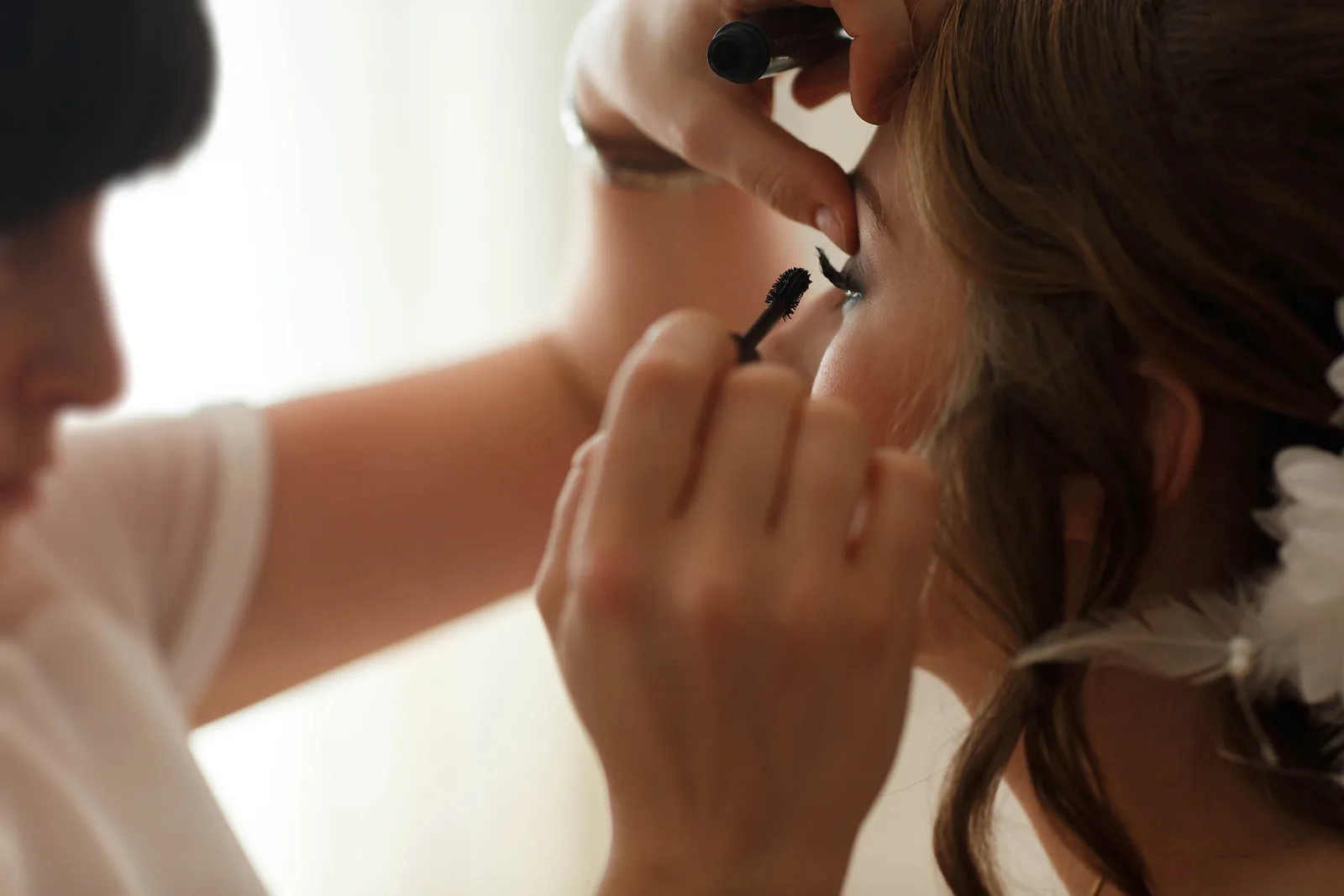
As a rule of thumb, allow 30 minutes per bridesmaid, parent or other guest receiving hair or makeup. Use 45 minutes for a slower pace or more complex looks. Block at least 90 minutes for the person getting married, plus a minimum 10-minute gap between appointments so one delay does not domino through the lineup.
Your artists can sequence appointments around dress time, while the photographer can plan the shift into portraits. Give both teams the dress deadline so they can shape the rest of the morning.
A five-person sample
With five people prepping and dress-on at 2:00, the sample gives each guest 30 minutes plus a 10-minute buffer. The person getting married has 90 minutes and a 10-minute buffer:
| Time | Appointment |
|---|---|
| 9:40 | Person 1 |
| 10:20 | Person 2 |
| 11:00 | You |
| 12:40 | Person 4 |
| 1:20 | Person 5 |
| 2:00 | Dress goes on |
This example puts the person getting married mid-queue. Going first can mean hours before photos when makeup may fade; going last can mean watching the clock while everyone else is ready. The middle slot leaves time to settle without the entire runway resting on one appointment.
Confirm who wants services
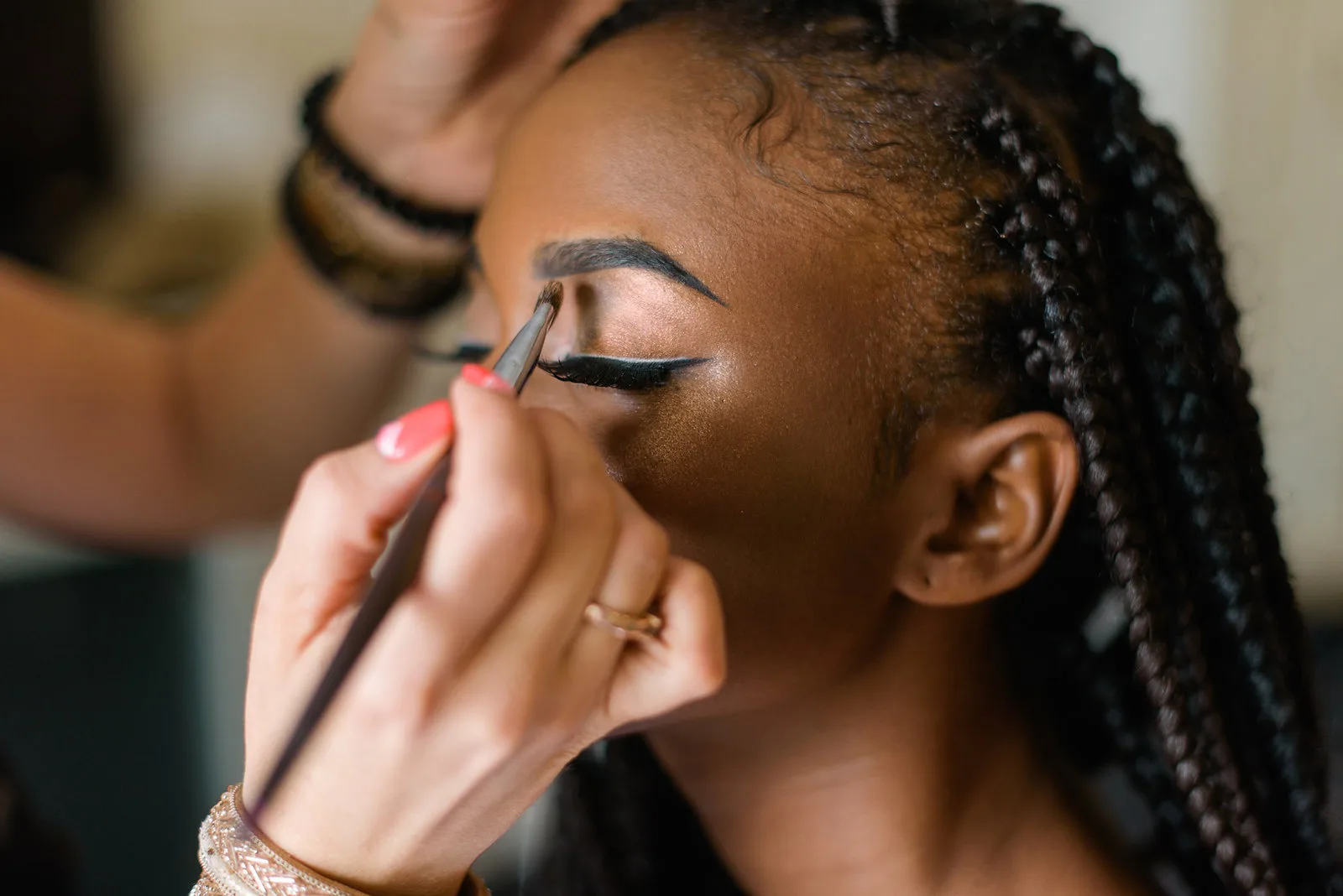
Ask early who wants hair, makeup or both. Set one clear deadline, share inspiration photos and learn what each person envisions. Headcounts become firmer when booking artists, and guests are not left wondering when to decide.
Some makeup artists impose minimums; the source planner encountered one with a 10-person minimum. More chairs can mean an earlier start, and a prep suite may not fit a full beauty crew plus the whole party. Scout the space on your venue tour and ask what setup is realistic there.
Share prep instructions ahead of time
- Ask artists what guests should do before arriving—fresh wash versus day-two hair, when to apply sunscreen so it absorbs—and relay that to everyone in the chair.
- Book haircuts about two weeks before the wedding so styles settle but still look fresh.
- If you plan extensions, ask your wedding stylist what suits the look. The source recommends 100% human hair because synthetics can glare in flash; extensions also change updo options.
- Lock in hair and makeup at the trial so you are not deciding in the chair on the wedding morning.
Ways to start later
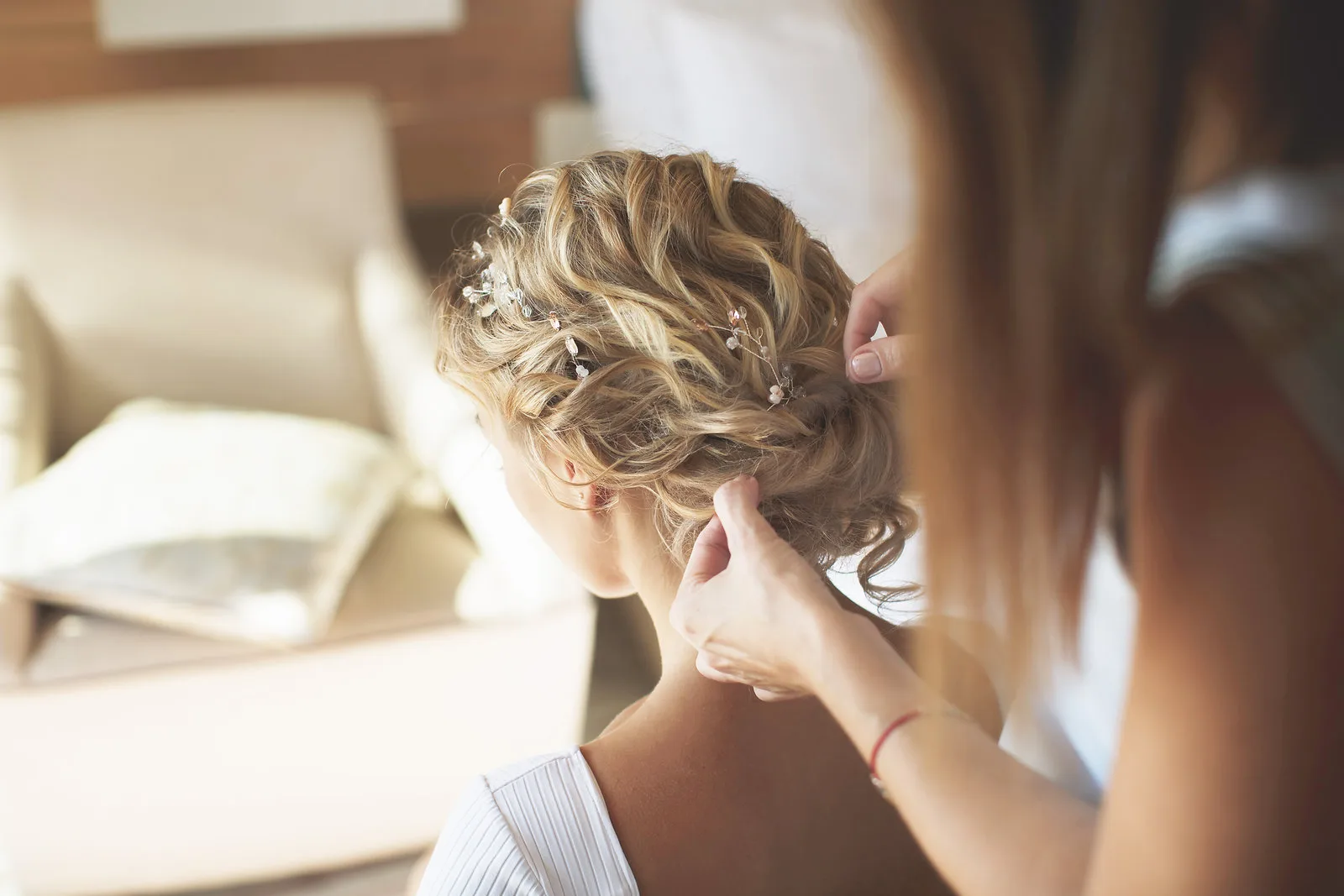
An early call time is not mandatory. Fewer appointments help—attendants can arrive with hair and makeup finished, or you book artists for a smaller headcount. Ask whether a second stylist can work in parallel. Simpler styles like soft waves or a low bun often take less time than an elaborate updo. A later ceremony or skipping a first look can push prep later too. A smaller party and no travel between sites make that shift easier.
When the photographer should arrive
The source photographer recommends arriving about an hour before prep wraps. Hair and makeup are usually nearly done, leaving room to capture a final lip touch, perfume and the move into the dress. There is no need to document every appointment if those are not the images you want.
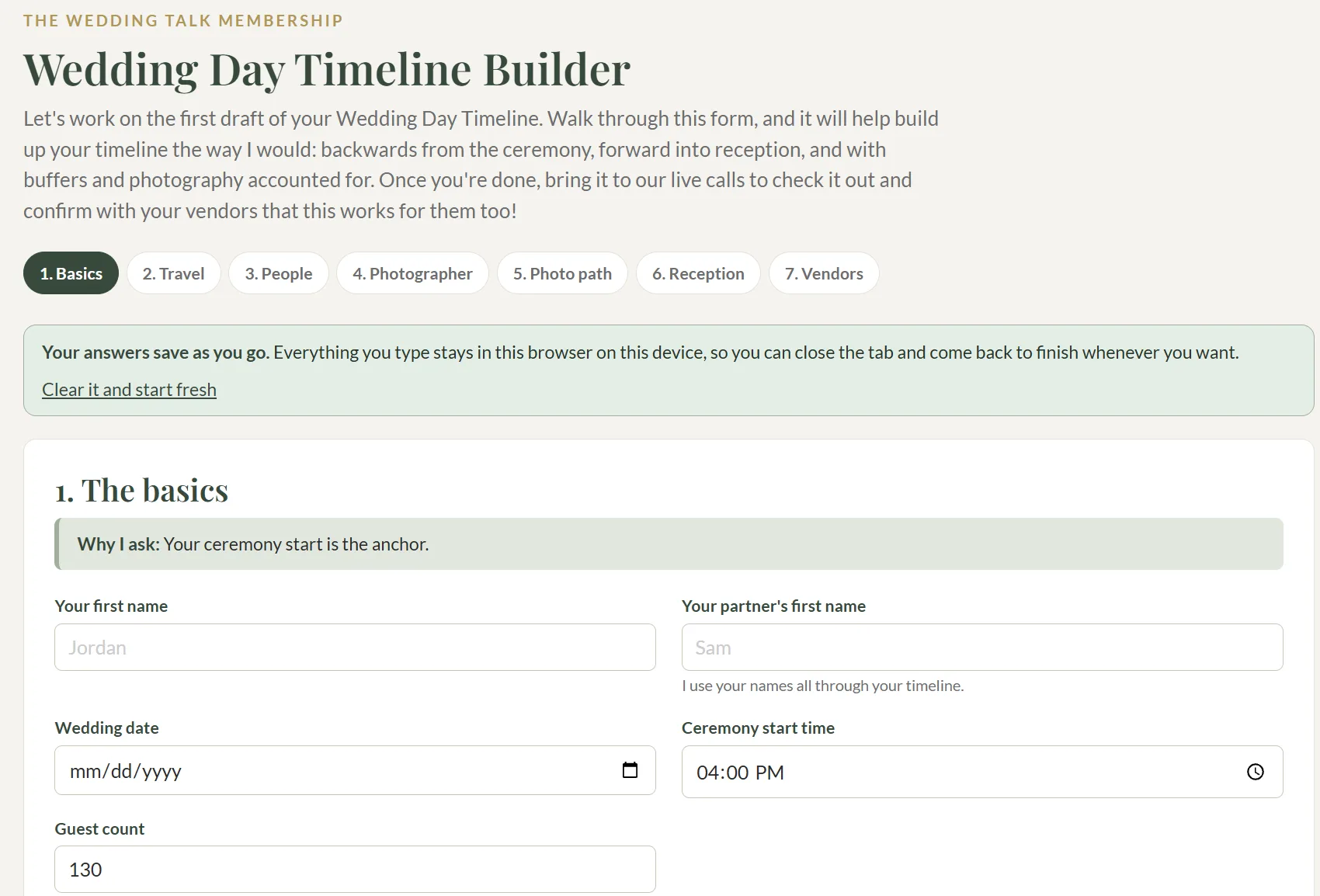
Couples building a full-day run sheet can use the source’s Timeline Builder and live calls on wedding timelines. The takeaway is straightforward: fix dress time, share it with your team, and leave enough slack for people to move at a human pace.